Choosing reliable aluminium beverage can suppliers in 2026 requires more than comparing prices or production volume. An Aluminium Beverage Can must protect flavor, withstand filling-line pressure, and arrive without dents, coating defects, or inconsistent dimensions. This guide introduces leading suppliers worldwide through practical purchasing criteria, not promotional claims alone.
The review considers can sizes, wall thickness, internal coatings, tab compatibility, recycled content, and decoration quality. It also examines factory capacity, quality-control systems, export experience, lead times, and minimum order quantities. A dependable supplier should provide clear technical drawings, batch records, material information, and test evidence. Small details matter. A weak seam can create costly leakage during transport.
Supplier performance may vary by region, season, and customer requirements. Public information is useful, but it cannot replace factory audits or sample testing. No shortlist is perfect. Buyers should verify certifications, production dates, complaint procedures, and packaging methods before signing agreements. Independent checks remain valuable.
The selected companies are assessed from a global sourcing perspective, including established manufacturers and competitive regional producers. Their strengths may differ: one supplier may offer advanced printing, while another provides faster regional delivery or stronger recycled-aluminium programs. Cost alone can mislead. Freight, tooling, customs, quality claims, and inventory risks can change the final value.
This introduction sets the foundation for a practical 2026 supplier overview. It aims to help beverage brands, contract fillers, and distributors make informed decisions. Conditions change quickly. Recheck every important specification before purchase.
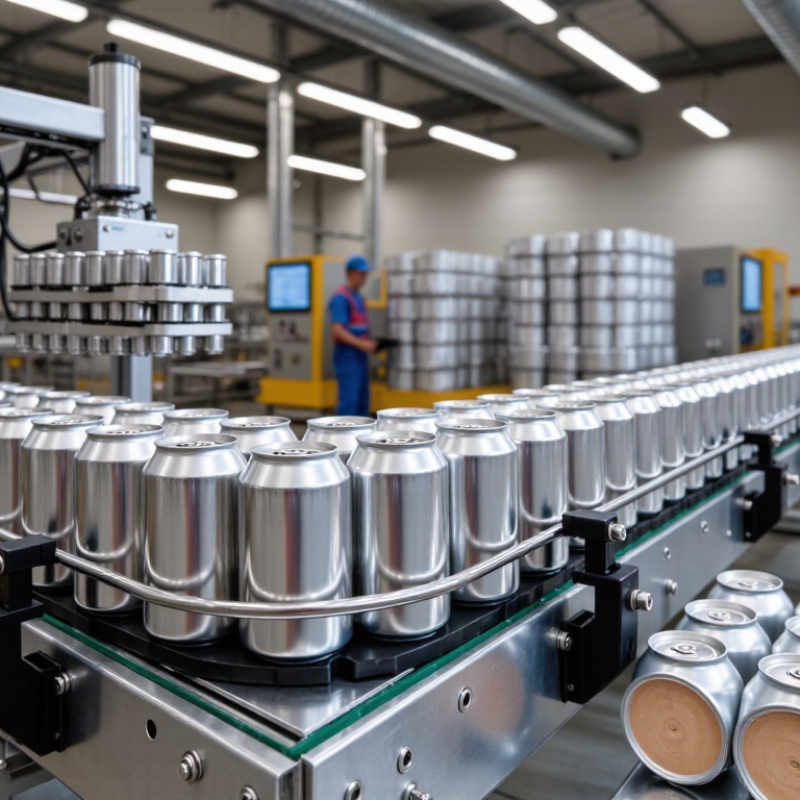
2026 Top Aluminium Beverage Can Suppliers Worldwide?
What Defines a Leading Aluminium Beverage Can Supplier in 2026
A leading aluminium beverage can supplier offers more than attractive packaging. It combines stable production, verified material quality, and practical customer support. Experienced suppliers understand how can thickness, alloy choice, and coating performance affect filling lines. Small details matter. A poorly controlled rim can create sealing problems, while uneven internal coating may affect taste and shelf life.
Reliable production begins with measurable systems. Suppliers should provide traceable batch records, documented quality checks, and consistent dimensional data. Independent testing can verify pressure resistance, coating safety, print durability, and recyclability claims. Certifications may support credibility, but certificates alone do not prove daily performance. Buyers should examine audit results, complaint records, and corrective actions. This is where professional judgment matters.
Leading suppliers also manage resources responsibly. Efficient forming equipment can reduce metal waste, water use, and energy consumption. Closed-loop recycling systems may strengthen material efficiency, provided recycled content remains properly tested. Regional warehouses and accurate delivery planning help reduce production delays. However, sustainability statements are sometimes too vague. A supplier that shares clear figures earns more trust than one using broad environmental language. In 2026, the strongest partnerships will depend on transparent communication, flexible can designs, and the willingness to improve after a quality issue.
Global supplier evaluation benchmark based on material capability, manufacturing performance, compliance, sustainability and supply-chain reliability
| Evaluation Dimension | Leading 2026 Benchmark | Typical Industry Requirement | Why It Matters | Recommended Evidence |
|---|---|---|---|---|
| Can Material | Aluminium beverage-can body stock based primarily on alloy 3104; end stock commonly uses alloy 5182. | Food-contact aluminium alloys with controlled chemistry, formability and mechanical properties. | Supports high-speed forming, low sidewall weight and reliable end performance. | Alloy certificates, mill test reports and food-contact declarations. |
| Available Can Sizes | Capability covering standard formats such as 200 ml, 250 ml, 330 ml, 355 ml, 440 ml and 500 ml, subject to regional tooling. | At least several standard slim, sleek and standard-diameter formats. | Enables beverage companies to serve different markets without changing supplier networks. | Tooling list, dimensional drawings and approved sample cans. |
| Can Diameter and Height Control | Production controlled to customer-approved drawings and applicable international can specifications, with statistical process control for critical dimensions. | Consistent neck, flange, body diameter and height within agreed customer tolerances. | Ensures compatibility with fillers, seamers, pasteurizers and secondary packaging equipment. | Inspection plans, capability studies, dimensional reports and seam-compatibility records. |
| Internal Protective Coating | Uniform internal coating selected for the beverage formulation, including water-based systems where technically suitable. | Coating must protect against corrosion, flavour interaction and product contamination. | Different beverages have different acidity, carbonation, alcohol and storage requirements. | Migration testing, coating-weight controls, compatibility testing and shelf-life results. |
| External Printing | High-speed offset or equivalent can printing with registered multi-colour graphics, varnish options and controlled colour reproduction. | Repeatable colour, barcode readability, scuff resistance and print-to-design accuracy. | Protects shelf appearance and supports consistent brand execution across production batches. | Colour proofs, spectrophotometer records, print standards and barcode verification reports. |
| Seaming Performance | Validated double-seam compatibility with documented seam teardown, seam thickness and overlap controls. | Stable hermetic sealing at the customer’s specified filling-line speed. | Reduces leakage, microbiological risk, product loss and line stoppages. | Seam-teardown results, leak testing, filler trials and corrective-action records. |
| Food-Safety Management | Certified food-safety management system aligned with ISO 22000, FSSC 22000, BRCGS Packaging Materials or an equivalent recognized scheme. | Documented hazard analysis, traceability, hygiene controls and recall procedures. | Provides formal control over materials and processes used for food-contact packaging. | Current certificates, audit reports, traceability tests and food-contact compliance statements. |
| Quality Management | ISO 9001-based quality system with automated inspection, statistical process control and documented corrective actions. | Controlled incoming materials, process checks, final inspection and complaint management. | Improves consistency and makes performance measurable across multiple production sites. | Certification, control plans, defect data, audit results and customer complaint metrics. |
| Recycled Aluminium Content | Documented recycled-content programme with the ability to report pre-consumer and post-consumer content separately. | Recycled content must be verified by a recognized chain-of-custody or mass-balance method where claims are made. | Aluminium recycling generally requires substantially less energy than primary aluminium production. | Third-party verification, material declarations, chain-of-custody records and lifecycle data. |
| Recyclability | Can design and coatings compatible with established aluminium recycling systems, supported by clear material identification. | Packaging should be recyclable in the target market and should not contain avoidable design barriers. | Improves material circularity and helps customers meet packaging-related sustainability commitments. | Recycling-compatibility assessment and market-specific packaging guidance. |
| Energy and Emissions Reporting | Site-level energy, greenhouse-gas and water data reported using recognized accounting methods, preferably with reduction targets. | Reliable Scope 1 and Scope 2 data, with relevant Scope 3 information where available. | Allows customers to compare packaging footprints and support credible sustainability reporting. | Assurance statements, emissions methodology, renewable-energy documentation and reduction plans. |
| Production Scale | Multiple high-speed production lines or qualified regional manufacturing capacity with redundancy for key formats. | Capacity sufficient for forecast demand, seasonal peaks and approved contingency volumes. | Reduces the risk of shortages during promotions, summer demand and unexpected disruptions. | Capacity statement, utilization data, expansion plans and business-continuity documentation. |
| Geographic Coverage | Manufacturing or distribution presence positioned close to major beverage markets in North America, Europe, Asia-Pacific, Latin America, the Middle East or Africa. | Reliable delivery lanes with practical transit times and local regulatory support. | Shorter supply routes can lower logistics risk, inventory exposure and transport emissions. | Plant and warehouse locations, route plans, lead-time records and regional compliance capability. |
| Delivery Reliability | Consistent on-time-in-full delivery supported by vendor-managed inventory, safety stock or agreed call-off schedules. | Performance measured against confirmed purchase orders and customer delivery windows. | Can shortages can stop filling lines and create significant commercial losses. | Historical OTIF data, inventory policy, lead-time agreement and escalation procedure. |
| Product Traceability | Full traceability from aluminium coil and coating materials through production, inspection, palletization and shipment. | Batch identification retained for the period required by applicable law and customer agreements. | Enables fast containment, investigation and recall if a quality issue occurs. | Mock-recall results, batch records, barcode systems and retention-policy documents. |
| Innovation Capability | Ongoing development in lightweighting, shaped cans, specialty finishes, low-impact coatings and digital quality monitoring. | Documented technical-development process and ability to complete trials at commercial scale. | Helps beverage producers differentiate products while controlling material and operational costs. | Pilot-line data, trial protocols, patent disclosures where relevant and commercialization timelines. |
| Commercial Competitiveness | Transparent total-cost proposal covering can price, decoration, tooling, freight, storage, minimum order quantities and index-linked aluminium adjustments. | Pricing should be evaluated on total delivered cost rather than unit price alone. | Freight, tooling and inventory costs can materially change the economics of a supply programme. | Open-book quotation, price-adjustment formula, payment terms and service-level agreement. |
Evaluation note: A leading aluminium beverage can supplier in 2026 should be assessed through verified technical, quality, sustainability and delivery evidence rather than production scale or price alone. Requirements may vary by beverage formulation, can format, destination market and applicable food-contact regulations.
North America has mature demand, established collection networks, and plants near filling centers. Europe emphasizes recycled content and packaging recovery. Asia-Pacific is expanding quickly through urban beverage consumption and shorter delivery routes.
Nearby production can reduce transport time and protect empty-can quality. Border delays may still affect regional shipments. Imported sheet or coatings can increase supply risk.
Review experience with your can size, filling speed, and beverage type. Request recent production samples and records from several batches. Brochures are not enough.
Check dimensions, wall thickness, coating coverage, print accuracy, and double-seam strength. Carbonated beverages may require different pressure performance. Independent testing can help with new coatings.
Ask how the supplier measures process variation and reports failures. Inspect traceability from raw materials to corrective actions. One perfect sample proves very little.
Observe warehouse humidity, pallet protection, line cleanliness, and changeover discipline. Check how rejected cans are separated and recorded. Small details matter.
Request traceable recycled-content documentation and material records. Ask how energy use and recovery data are measured. Independent verification is safer than accepting claims alone.
Confirm minimum orders, tooling charges, lead times, emergency capacity, and packaging protection. Damaged pallets can erase a low quotation. Price is not the whole calculation.
Artwork changes and moving shipping dates require fast, honest responses. A capable supplier should explain limitations clearly. Communication may still fail sometimes. Check it before committing.
In 2026, a leading Aluminium Beverage Can supplier is defined by consistent product quality, advanced manufacturing capabilities, reliable delivery, and a strong commitment to sustainability. The global market is supported by major production regions across Asia, Europe, North America, and other developing manufacturing hubs, serving beverage producers with a wide range of can formats. Available options may include different capacities, shapes, wall thicknesses, finishes, internal coatings, external colors, printing methods, and customized designs to meet branding and packaging requirements.
When evaluating suppliers, buyers should consider production scale, material efficiency, quality control systems, testing standards, tooling capabilities, and supply chain reliability. Sustainability is also increasingly important, including the use of recyclable aluminium, reduced material consumption, energy-efficient production, and responsible waste management. The right supplier should offer transparent communication, flexible order quantities, stable lead times, competitive total costs, and technical support from design through mass production. A careful comparison of these factors can help businesses select a dependable long-term partner for beverage packaging needs.

 Sunrise Cans