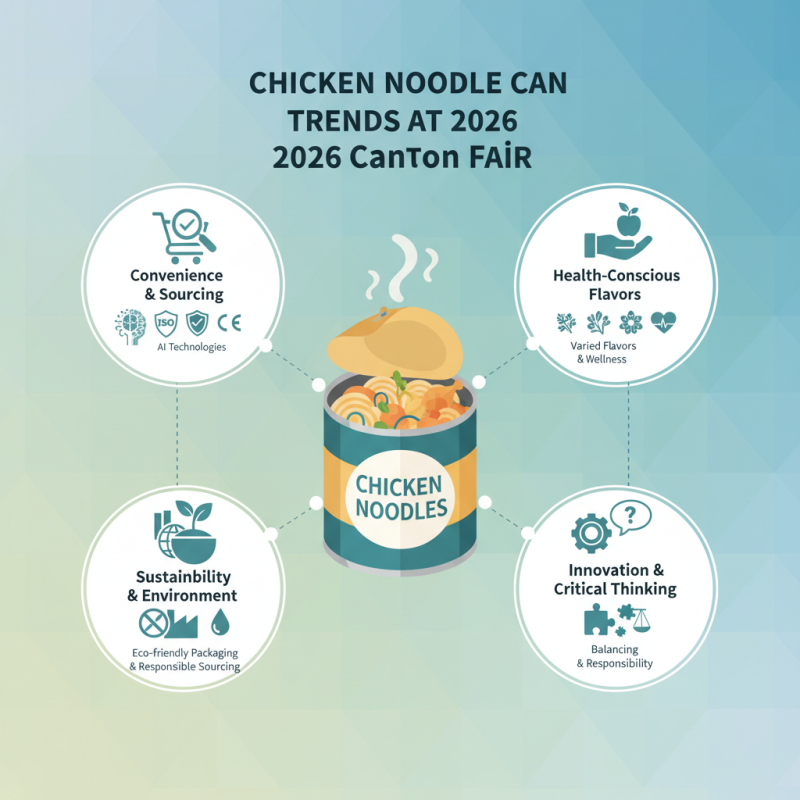
The 2026 Canton Fair is set to showcase many exciting trends, particularly in the food sector. Among these trends, the "Chicken Noodle Can" is expected to catch the eye of many attendees. This product represents convenience and comfort food, appealing to a wide audience. The fair will feature innovative packaging and varied flavors designed to attract health-conscious consumers.
With the introduction of AI technologies, sourcing these products will be easier than ever. Buyers can filter suppliers based on essential qualifications. Highlighting standards like ISO and CE ensures quality. The fair's efficient navigation will help procure the best Chicken Noodle Can options and more.
Yet, there are concerns about sustainability and ingredient sourcing. While the Chicken Noodle Can may offer easy meals, it’s vital to consider its impact on health and the environment. Attendees should think critically about these issues. As trends evolve, creating products that balance convenience with responsibility will become increasingly important at the fair.
In 2026, the chicken noodle can market is expected to thrive. Emerging flavors are shaping customer preferences dramatically. According to the latest industry report, the market for chicken noodle cans is projected to grow by 15% annually. Consumers seek exciting taste profiles, often driven by culinary trends.
Savory spices and global inspiration are mapping the future of this sector. Flavors like Szechuan peppercorn and coconut curry are being explored. These unique tastes cater to millennials and Gen Z. They crave diverse and bold culinary experiences. In a survey, over 60% of young consumers expressed interest in trying exotic flavors in everyday meals. This shift highlights the importance of innovation.
However, not all flavor introductions have been successful. Some products fail to resonate with traditional tastes. Customers often seek comfort in familiar flavors. Balancing the new with the traditional remains a challenge. The competition will be tough as companies vie for market share. Understanding consumer preferences will be crucial to navigate these shifting sands.
The chicken noodle can industry is poised for significant changes by 2026. Sustainability will be a major focus in manufacturing processes. Reports suggest that around 70% of consumers are now more eco-conscious. They favor products that minimize environmental impact. Companies must adapt to these changing preferences.
One area of concern is packaging. Traditional metal cans often use non-recyclable materials. Transitioning to biodegradable options could be a game changer. Additionally, 60% of manufacturers are still relying on energy-intensive production methods. This raises questions about their commitment to sustainability. Innovations such as solar energy and waste-to-energy systems are emerging but not widely adopted.
Water usage is another critical issue. In some regions, production processes consume excessive water, impacting local supplies. Data indicates that about 30% of chicken noodle can factories have started to implement water-saving technologies. However, progress remains slow. Without quick action, the industry risks falling behind on sustainability goals. The urgency for more environmentally friendly practices is clear.
The health trends shaping the future of food are influencing the chicken noodle can market significantly. In 2026, consumers prioritize nutrition and wellness. They seek meals that are not only convenient but also wholesome. Expect to see more options featuring organic ingredients. Brands are experimenting with lower sodium and added nutrients. This shift aims to cater to health-conscious eaters.
Sustainability is another crucial factor. Many consumers want eco-friendly packaging. They are concerned about environmental impact. As a result, companies are exploring biodegradable materials. This change requires careful consideration of production processes. Transparency in sourcing ingredients is critical for building trust. However, some companies may struggle to balance cost and quality in this transition.
Another area of innovation focuses on flavor diversity. Traditional chicken noodle may no longer satisfy all tastes. People are open to global flavor profiles. This includes spices and herbs from various cultures. Yet, finding the right balance can be challenging. Innovations must resonate with consumers while preserving health standards. The future of chicken noodle cans holds potential, but the journey is complex and requires adaptation to meet evolving demands.
| Trend | Description | Impact on Innovation | Health Aspect |
|---|---|---|---|
| Plant-Based Ingredients | Incorporation of plant-based proteins into chicken noodle cans. | Encourages innovation in flavor and texture substitutes. | Supports vegetarian and vegan diets. |
| Low Sodium Options | Reduction of sodium content in canned chicken noodle products. | Drives the development of new seasoning solutions. | Promotes heart health and reduces hypertension risks. |
| Functional Ingredients | Adding nutrients like probiotics and superfoods. | Encourages product differentiation and premium pricing. | Enhances digestive health and overall wellness. |
| Sustainability Packaging | Use of eco-friendly materials for canning. | Drives innovation in packaging technology. | Reduces environmental impact and promotes sustainability. |
| Flavor Infusions | Experimental flavors incorporating global cuisines. | Encourages creativity in product development. | Appeals to diverse taste preferences and culinary exploration. |
The 2026 Canton Fair is poised to showcase innovative trends in chicken noodle can designs and packaging. Consumer preferences are quickly evolving, influenced by factors like convenience, health, and sustainability. A recent market report highlighted that 75% of consumers now prioritize easy-to-open packaging. This shift shows how important user experience is in product design.
Design elements are also crucial. Bright colors and transparent windows enhance shelf appeal. About 58% of consumers prefer packaging that clearly displays nutritional information. This trend emphasizes the need for transparency in ingredients and health benefits. Creative designs not only attract buyers but also communicate brand values effectively.
**Tip:** When designing packaging, keep sustainability in mind. Eco-friendly materials are increasingly favored, with 65% of consumers willing to pay more for them.
The challenge lies in balancing aesthetics with functionality. Many designs overlook user-friendly features. A can might look appealing but can be frustrating to open. It's essential to seek feedback and iterate on designs to create a perfect blend of style and usability.
**Tip:** Conduct consumer testing early in the design process. This helps identify pain points and reinforces the connection with customers.
The global market for chicken noodle cans is set for substantial growth by 2026. Analysts predict an increase in demand across various demographics. This trend reflects a blend of convenience and nostalgia. Many consumers seek quick meals that evoke a sense of home.
By 2026, sales projections indicate a rise of over 20%. This growth can be attributed to urbanization and busy lifestyles. More people are seeking easy meal solutions. However, some regions may struggle with supply chain issues. These challenges could affect product availability.
Innovations in packaging and ingredients are also on the horizon. Consumers are increasingly interested in health-focused options. Sustainable practices can influence purchasing decisions as well. Companies must adapt to meet these changing preferences. Balancing quality and affordability remains a challenge. This evolving market landscape requires constant reflection and adjustment.
: Sustainability is a major focus, with eco-friendly practices being prioritized.
Packaging is crucial; many consumers prefer biodegradable materials over traditional non-recyclable options.
Many manufacturers still use energy-intensive methods, although some are exploring renewable energy innovations.
Excessive water consumption is a concern, but about 30% of factories are implementing water-saving technologies.
Consumers are prioritizing nutrition, seeking meals that are convenient and contain organic ingredients.
Sales are expected to rise over 20%, driven by urbanization and busy lifestyles.
Some companies struggle to maintain quality while adapting to sustainability and health-focused practices.
Flavor diversity is essential, as consumers seek global profiles, but balancing taste and health can be tough.
Supply chain issues may impact product availability in certain regions, affecting sales growth.
Transparency builds trust with consumers, who are increasingly concerned about the origins of their food.
The upcoming Canton Fair in 2026 is set to highlight the latest trends in Chicken Noodle Can innovations. Emerging flavors are expected to cater to evolving market demands, reflecting a growing consumer interest in diverse and unique tastes. In addition, sustainability practices are being prioritized in the manufacturing processes of Chicken Noodle Cans, aligning with global efforts to reduce environmental impact.
Health trends will also play a significant role in shaping the innovations within the Chicken Noodle Can segment, as consumers increasingly seek nutritious options. Furthermore, packaging and design preferences are being influenced by consumer insights, leading to more appealing and functional products. With these developments, global sales projections for Chicken Noodle Cans in 2026 and beyond indicate a promising growth trajectory, as manufacturers adapt to meet the changing preferences of health-conscious consumers.

Sunrise Cans